
Lack of new investments may undermine higher consumption

Rising crude oil prices and muted passenger traffic in the July-September quarter (second quarter, or Q2) of 2023-24 (FY24) have raised concerns about the profitability of listed aviation players. These two concerns have caused the stock of InterGlobe Aviation (IndiGo), the largest player in the sector, to slip by 11 per cent since its highs at the end of July. Nuvama Research expects yields to cool down in the near term due to seasonality, rising crude oil prices, and higher capacity.
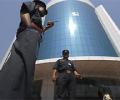
Officials said Sebi is closely in touch with RBI on the market developments.

The stock markets are seen taking temporary support at 12,500 for the Sensex and 3600 for the S&P Nifty before heading lower in the coming days.
Scottish soccer club Rangers raised around 22.2 million pounds on its return to the stock market on Wednesday, funds which the club hopes will help to support a recovery after being demoted to the fourth tier in Scotland.
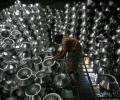
Hindalco's first quarter (Q1FY23) results indicate healthy domestic volumes for aluminium and copper, and lower cost of production. Subsidiary Novelis saw weak volume trends but it managed to push operating profit margins on a better mix and pricing hikes. The weak global outlook on aluminium is a cause for ongoing concern.

Tyre stocks have been on a tear over the past six months, with average returns exceeding 45 per cent. Except for Apollo Tyres, which has seen a slight correction in the last month and a half, limiting its gains to 16 per cent, listed peers such as MRF, CEAT Tyres (formerly Cavi Elettrici e Affini Torino), and JK Tyre & Industries have delivered returns exceeding 30 per cent during this period. Production-related constraints and sluggish demand in Europe, where sales are expected to remain flat, coupled with high valuations, have contributed to Apollo Tyres' underperformance. The tyre sector's gains can be attributed to robust growth trends driven by the replacement market, which constitutes more than two-thirds of sales.

Shares of Indian Railway Catering and Tourism Corporation (IRCTC) hit a new high of Rs 4,512 after surging 8 per cent on the BSE in Wednesday's intra-day trade, on the back of heavy volumes, ahead of 1:5 stock split. The trading volumes on the counter more-than-doubled today, with a combined 7.02 million equity shares having changed hands on the NSE and BSE till 11:19 am. In the past one week, the stock of the state-owned travel support services company has rallied 20 per cent after the company on September 29, 2021, said that it has fixed October 29, 2021 as the record date, to ascertain the name of shareholders entitled for subdivision/split of equity shares of Rs 10 each into five (5) equity shares of face value of Rs 2 each.

While the amount collected is a tad lower than last two years, it may surpass the previous two years' collections by the end of the year.
15 stock markets globally will hit a record high level by end-2012.

The last year has seen public sector undertakings (PSUs) outperforming the Nifty50, albeit by a small degree. But PSU valuations are still, on average, less than half of private sector peers at price-to-equity or PE 8.7x for the Nifty PSU Index versus 20.9x for the Nifty50. There are several reasons for lower valuation.

The total market valuation of all listed firms at the BSE had first hit Rs 100 trillion level on November 28, 2014.

Textile stocks have exhibited a mixed performance so far this calendar year (CY23), amidst higher domestic cotton prices and tepid global demand. Shares of Page Industries, Dollar Industries, Lux Industries, and VIP Clothing have declined up to 13 per cent so far in CY23, as against a 9 per cent jump in the S&P BSE Sensex. On the contrary, shares of Arvind, Welspun India, Raymond, and Gokaldas Exports have gained up to 51 per cent, during the same period.

Benchmark indices rebounded sharply on Tuesday after falling for the past two sessions, with the Sensex rallying nearly 777 points, helped by buying in index major Reliance Industries and recovery in global markets. The 30-share BSE benchmark jumped 776.72 points or 1.37 per cent to end at 57,356.61. During the day, it rallied 862.35 points or 1.52 per cent to 57,442.24. The broader NSE Nifty gained 246.85 points or 1.46 per cent to finish at 17,200.80.

Even as the Indian benchmarks, the BSE Sensex and Nifty 50, crumbled over three per cent today, experts are optimistic about the Indian economy and believe investors can still make 30 per cent plus returns in 2015

Analysts attribute this withdrawal trend to the nervousness ahead of US presidential elections and the fact that the markets raced ahead even as the economic recovery remained fragile back home.
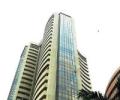
In an hour-long chat on rediff.com on Thursday, A K Prabhakar, senior VP and Head -- Equity Research (Retail), Anand Rathi Financial Services Ltd, discussed the best stocks to put the investors' money in.

Asia has opened largely in the green ahead of a raft of Chinese data due during the day.
Investor wealth slumped by Rs 1.55 lakh crore on Thursday today, dragged down by massive selling in the stock markets where nearly seven out of ten shares closed lower.

In the longer-term, analysts expect IHCL to see revenue CAGR of 15 per cent between FY23 to FY25 and Ebitda CAGR of 20 per cent in the same period. Analysts are seeing targets of around Rs 375-Rs 380 for the stock, which is a significant upside from the current Rs 313.

Indian equities are no longer cheap vis-a-vis global markets, and only a short distance away from being the most expensive they have ever been.

The official data on April-June GDP will be released on August 31.

Analysts, however, suggest investors remain selective on realty stocks and buy only where there is revenue visibility and a credible promoter backing.

HCL Tech was the top gainer in the Sensex pack, rallying around 5 per cent, followed by Tech Mahindra, Infosys, PowerGrid, Sun Pharma, L&T and Nestle India. NSE Nifty climbed 137.90 points or 1.03 per cent to 13,466.30.
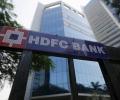
The country's most valuable lender HDFC Bank can perhaps no longer claim to be a favourite of foreign portfolio investors (FPIs). Two data indicators, both somewhat interconnected, point to this - the diminishing premium of HDFC Bank's American depositary receipts (ADRs) compared to local shares, and the ample investment opportunities available to FPIs in the domestic market. The ADR premium has shrunk to below 5 per cent, down from over 30 per cent in March 2021, and even lower than recent levels.

'It won't help being complacent about the momentum and valuations of equities that currently exist.'

India's equity markets are on a roller-coaster ride, after delivering spectacular returns for two consecutive years - in 2020 and 2021. The benchmark National Stock Exchange's (NSE's) Nifty50 is down 1.5 per cent in the first nine months of the current calendar year 2022 (CY22) as foreign portfolio investors sold Indian stocks due to rising bond yields in the US and across global markets, including India. The sell-off in the Indian equity markets has, however, not been broad-based and largely limited to sectors facing earnings headwinds from rising interest rates, lower commodity and energy prices, and likely economic recession in advanced economies.
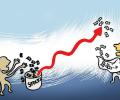
Small stocks made a dashing comeback in 2020 after delivering negative returns in the last two years as increased retail investor participation in pandemic times saw small-cap index surging up to 31 per cent and outperforming the bigger benchmark gauge. This year turned out to be eventful for the equity market, witnessing bearish and bullish sentiments at different points of time. While the initial part of COVID-ravaged 2020 saw the bears in full force amid concerns related to the pandemic and lockdowns hurting economic activities, bulls made a comeback towards the latter half of the year. As the market swayed with many lows as well as highs, small and mid-cap indices emerged as markets favourites in 2020.

ITC's results for the January-March quarter (Q4) were strong, with robust growth in the fast-moving consumer goods (FMCG) segment and a good performance in hospitality. The tobacco division's performance was on expected lines, with double-digit volume growth, helped by reclaiming of market share from the smuggled trade. There was 60 per cent growth in non-cigarette earnings before interest and tax (Ebit), despite a relatively weak performance in paperboards.

Equity investors became richer by Rs 5.66 lakh crore as markets bounced back sharply on Tuesday following a recovery in global equities. The 30-share BSE Sensex jumped 1,276.66 points or 2.25 per cent to settle at 58,065.47 points. During the day, it zoomed 1,311.13 points or 2.30 per cent to 58,099.94 points. The market capitalisation of BSE-listed firms climbed Rs 566,318.84 crore to Rs 273,92,739.78 crore.

The stock of Mahindra & Mahindra (M&M) has been touching successive all-time highs on the bourses and, over the past year, gained 81 per cent. While the S&P BSE Auto Index has not performed poorly, registering gains of 73 per cent, it still trails the company by 800 basis points (bps) during this period. There are multiple reasons why investors are beating a path to M&M's counter.

This is a good opportunity for long-term investors to pick quality small and midcap stocks at reasonable valuations.

Of the 30-share Sensex, 13 ended higher, while 17 led by Power Grid, Tata Steel, Bajaj Auto, Hero MotoCorp, NTPC, Tata Motors, Dr Reddy's, M&M, GAIL, Infosys and L&T finished lower, fell by up to 2.40 per cent
The country's largest stock bourse NSE on Friday said it stuck to the primary site for carrying out trading on Wednesday and did not switch to the disaster recovery site after a considered view while dealing with telecom connectivity issues which led to the nearly four-hour halt in trading earlier this week. It can be noted that Sebi had asked the exchange, which also trades the highest derivative volumes in the world, as to why it did not switch to the Disaster Recovery (DR) site. "Post shut down of trading on NSE, we considered all the available alternatives on hand including invocation of DR to decide on the course of action that would bring up the market at the earliest with least disruption to market participants and post evaluation, a decision was taken to bring up the systems at the primary site," a statement from NSE said.

Equity benchmarks continued their winning momentum for the third day on Thursday and jumped over 1.50 per cent, tracking an overall bullish trend in Asian equities. On the political front, the BJP headed for a second straight win in politically crucial Uttar Pradesh and dominated the trends chart in three other states. The 30-share BSE benchmark Sensex opened in the green and further zoomed 1,595.14 points or 2.91 per cent to 56,242.47 during early trade.

A muted revenue performance in the September quarter and weak management commentary weighed on the stock of consumer major Marico which shed 8.5 per cent to Rs 542 from its intraday highs on Tuesday. The company indicated that demand trends were similar to that of the June quarter with instances of increasing food prices and below-normal rainfall distribution in some regions impeding the anticipated recovery in rural demand.

Equity investors became richer by over Rs 5.77 lakh crore on Tuesday, helped by a rally in the broader market where the BSE benchmark jumped nearly 2 per cent. The BSE Sensex zoomed 934.23 points or 1.81 per cent to settle at 52,532.07. Driven by the rally in equities, the market capitalisation of BSE-listed firms jumped by Rs 5,77,006.83 crore to stand at Rs 2,40,63,930.50 crore. "Absence of fresh selling triggers in the domestic and global economy along with falling commodity prices relieved the heavily discounted equity market to showcase recovery.

Nifty crosses 9,750-mark; Bharti Airtel, TCS, Wipro, Lupin and Coal India gained the most on BSE Sensex

The Federation of Automobile Dealers Associations (Fada) has raised concerns over the rising inventory levels of four-wheelers at dealerships which have now reached a 60-day stockpile or around 550,000 units. This situation could mean a significant financial burden on dealerships due to the additional interest cost for the extended holding period. These 60-day inventory levels are nearing the 2018-19 levels when inventory days had approached 70 days, leading to the closure of around 282 passenger vehicle dealerships.
 © 2026 Rediff.com - Advertise with us - Disclaimer - Privacy Policy - Sitemap - Feedback - About us - Terms of use - Grievances